
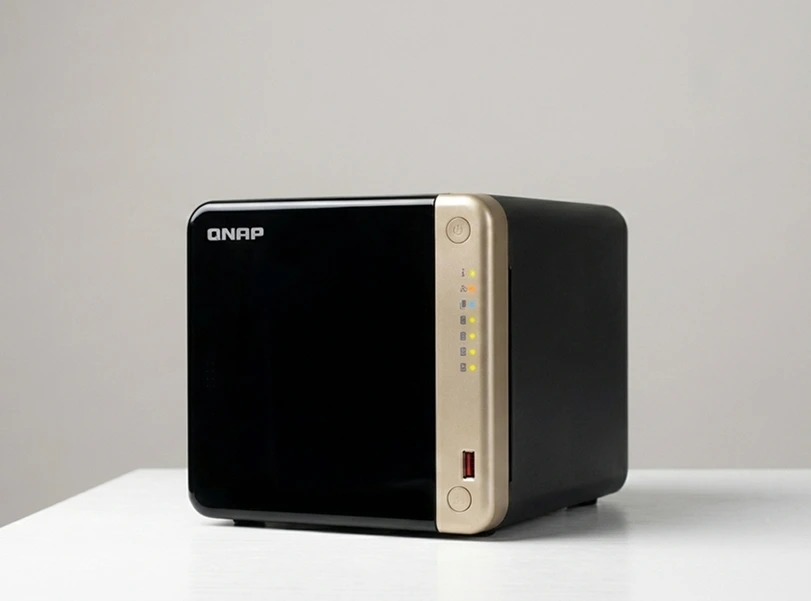
A QNAP TS-464 deployed by an auto gallery to support key CCTV requirements suffered repeated impact damage after several accidental drops. The NAS ultimately failed, disrupting recording and restricting access to time sensitive security footage.
Our team executed a structured diagnostic, stabilised the RAID configuration, and completed QNAP data recovery to restore the priority surveillance video set.
The gallery quickly regained situational oversight and re established end to end monitoring continuity with critical evidence back in hand.
Incident Background and Impact Assessment
The QNAP TS-464 sat at the core of the gallery’s integrated CCTV setup, capturing multi camera footage across the site.
After the accidental drops, the gallery experienced:
Complete NAS shutdown with no accessible footage
Disrupted video recording processes
Loss of operational visibility and security coverage
Based on these symptoms, the incident aligned with common NAS failure patterns. For a wider technical overview, see our article on NAS failure and recovery.
Key Diagnostic Findings
Given the RAID architecture in QNAP systems, our engineers drew on methodologies used in comparable QNAP data recovery cases to confirm the most likely RAID layout and configuration risk points.

Step by Step Recovery Workflow
A controlled, step driven process ensured the surveillance data could be recovered safely and with minimal risk escalation:
Documented the handling timeline, drop incidents, and likely impact zones.
Reviewed RAID configuration behaviours in line with the guidance outlined in how many drives for RAID to anticipate potential layout constraints.
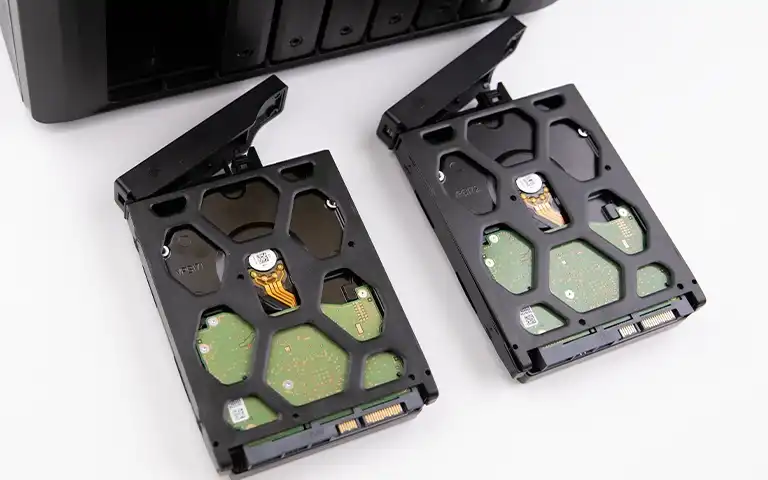
The team removed all drives in the original sequence order.
Each drive was isolated prior to any power assessment to reduce the risk of further platter or head damage.
Drives were imaged using controlled read parameters.
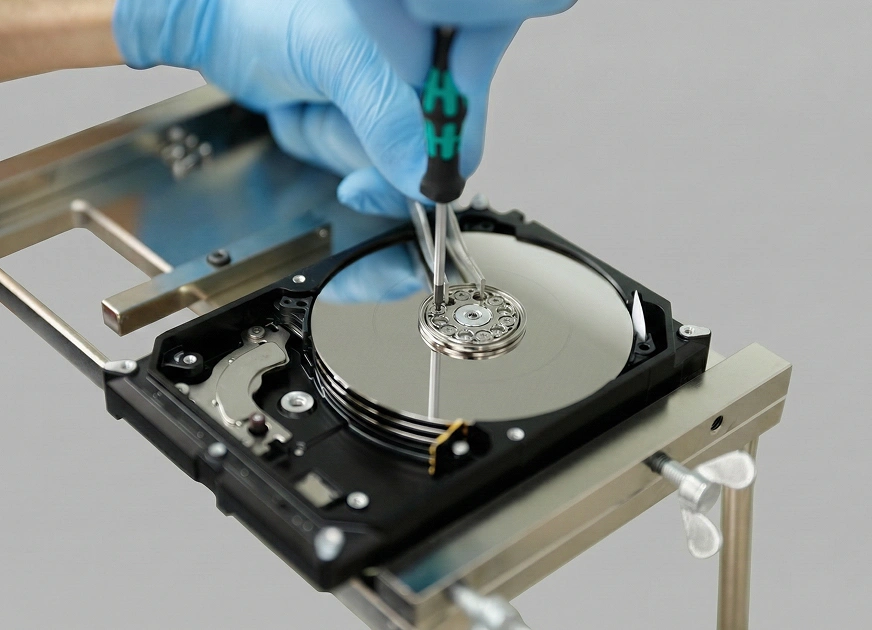
Any drive showing signs of mechanical stress moved into stabilisation protocols, following approaches used in QNAP related incidents such as QNAP RAID5 mdadm failure recovery.
Engineers rebuilt the TS-464 RAID environment using verified disk images.
Multiple configuration scenarios were validated until parity logic and CCTV recording structures aligned.
Located recording archives, fragmented index files, and camera storage paths.
Extracted usable video sequences and validated priority surveillance windows to support continuity and evidence requirements.
Critical Handling Advisory
If a NAS suffers impact damage, do not reboot it or attempt any QNAP rebuild actions. Forced RAID repair can overwrite still recoverable sectors. Review our troubleshoot RAID failure guide before taking any next steps.
Fast turnaround times for business-critical data
Final Recovery Outcomes
RAID Recovery Services returned a fully validated surveillance dataset containing:
Restored video footage from multiple camera angles
Key monitoring intervals surrounding operational hours
Folder structures reorganised to match QNAP’s native directory conventions
The gallery received the restored data on a secure, encrypted drive. Playback testing confirmed integrity, consistent with validation workflows referenced in our article on NAS data loss causes.
The organisation regained surveillance continuity and eliminated critical operational blind spots.
Strategic Takeaways for Preventing Future Data Loss
To strengthen surveillance continuity and reduce the risk of similar failures, organisations should consider the following measures:
Implement a secondary backup workflow: Maintain an independent backup destination for surveillance footage to reduce single point of failure exposure and avoid operational gaps if the primary NAS goes down.
Use vibration and shock resistant mounting: Surveillance environments often involve equipment being moved, adjusted, or repositioned. Protective mounting helps mitigate impact risk and supports longer drive service life.
Monitor drive health regularly: Set up scheduled checks for drive temperature, SMART indicators, and I/O performance to flag early warning signs of mechanical decline before it escalates into outage level failure.
Document RAID and camera storage configurations: Recording details such as drive order, RAID level, firmware versions, and camera mappings accelerates incident response and simplifies reconstruction if QNAP data recovery is ever required.
Conduct periodic risk assessments: Review physical placement, handling routines, and environmental exposure to reduce accidental damage and improve overall operational resilience.
Trust the experts with proven results
Frequently Asked Questions
Can a physically dropped QNAP TS-464 still be recovered?
Yes. Even with impact damage, data is often recoverable if the drives are handled correctly and imaged before further degradation occurs.
Should I power on the NAS after accidental damage?
No. Powering on a damaged NAS can trigger further mechanical harm or destabilise RAID metadata, which can materially reduce the likelihood of a successful recovery.
How long does surveillance data recovery typically take?
Timelines vary depending on drive condition and RAID complexity, but many CCTV focussed recoveries are completed within a few working days after evaluation.
What parts of surveillance data can usually be restored?
Video recordings, camera folder structures, metadata, index files, and specific timeline segments are commonly recoverable, subject to the integrity of the drives and recording format.
Do all drives need to be functional for a successful recovery?
Not always. In many RAID configurations, recovery remains viable even if one or more drives are degraded, provided correct imaging and reconstruction are carried out without further write activity.