
A professional photographer reached out to us after suddenly losing access to their Apple Core Storage RAID 5 system, which held hundreds of high-value project files. The drives contained photographs prepared for an upcoming exhibition, making the recovery both urgent and business-critical.
Like many creative professionals, the client depended on Apple’s Core Storage environment for its flexibility and day-to-day reliability.
When the RAID stopped mounting, the entire photo library became inaccessible without warning.
At that stage, it was clear that only a professional Apple RAID 5 data recovery service could restore the files safely and in full.
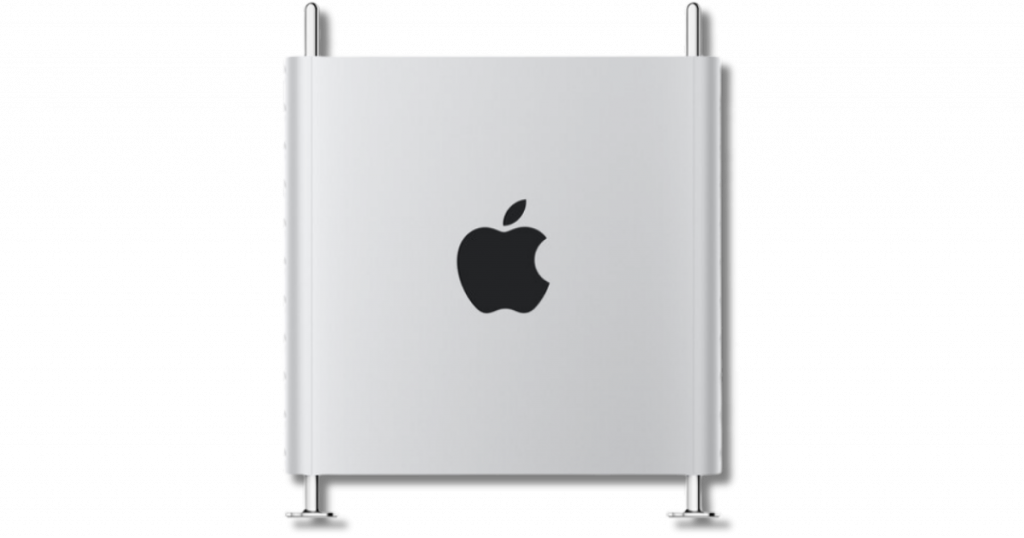
Unsuccessful Attempts to Access the RAID Volume
Before contacting us, the client tried several methods to restore access to their array.
They first used Disk Utility to inspect the drives, followed by an attempt to rebuild the volume through Target Disk Mode in the hope that the system would recognise the RAID configuration. Unfortunately, neither approach allowed the data to be accessed.
These steps are fairly typical among Mac users facing unexpected RAID issues.
However, repeated mounting attempts or incorrect recovery actions can increase the risk of overwriting data or causing further logical corruption.
Recognising the potential danger, the client stopped all attempts and reached out to our specialists for a controlled and safe recovery.
For more insight into the common reasons behind failures like this, visit Reasons for RAID Data Loss.
Comprehensive Evaluation in Our Data Recovery Lab
Following the initial consultation, we arranged a prepaid shipping label to ensure the device arrived safely at our facility. Once received, our engineers carried out a structured evaluation to pinpoint the exact cause of the failure.
Our diagnostic process included:
Visual inspection:
Assessing each drive for signs of physical damage, contamination, or electronic faults.Initial testing:
Performing non-invasive checks to confirm drive health and connection stability.Drive imaging:
Creating sector-by-sector clones of all drives to protect data integrity during the recovery process.RAID structure analysis:
Reviewing the array’s configuration, parity layout, and block sequence to identify inconsistencies.
The analysis confirmed that all drives were mechanically sound. The RAID 5 array had become inaccessible due to configuration inconsistencies rather than hardware failure.
Explore similar cases in our guide: RAID Controller Failure Recovery.
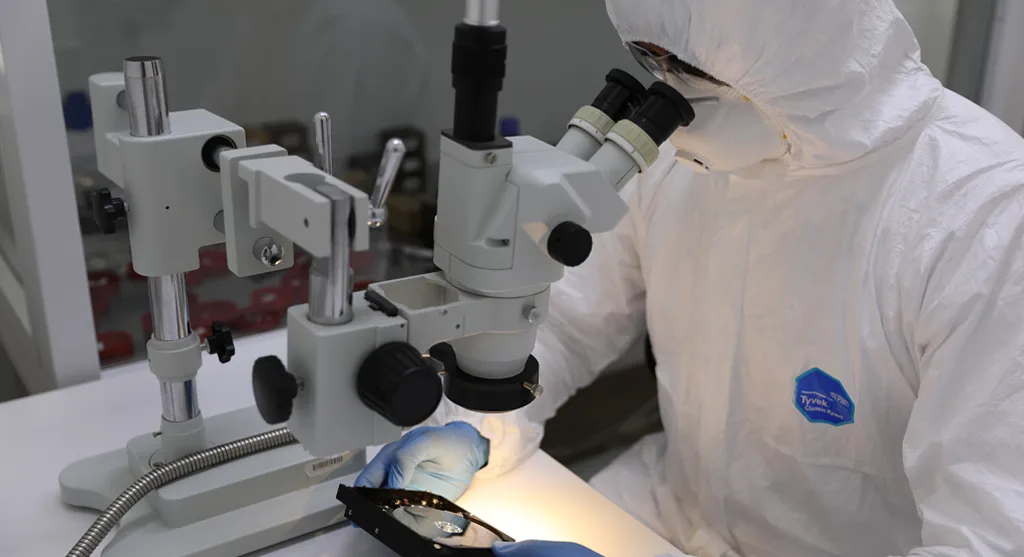
Unexpected RAID Configuration and Detected Failures
During the diagnostic phase, our engineers found that the RAID 5 configuration had an unusual and inconsistent structure. Each drive contained a different file system, which is highly irregular for a synchronised RAID array. This inconsistency caused the system to fail and made the volume unreadable.
Further analysis showed that the first drive was using Apple Core Storage, the second was formatted with ExFAT, and the third operated on UFS.
In addition, a fourth drive, which was not detected during the client’s initial attempts, displayed clear evidence of a head crash. The physical damage on this drive disrupted parity distribution across the array and prevented the RAID 5 from operating correctly.
This combination of mixed file systems and a mechanically damaged drive explained why the volume could not be accessed, even when using macOS recovery tools.
With the root cause confirmed, our engineers moved on to the next stage. This involved cloning the drives and reconstructing the array virtually.
For further insight into how configuration errors lead to RAID failures, visit What Is RAID 50? and Troubleshoot RAID Failure.
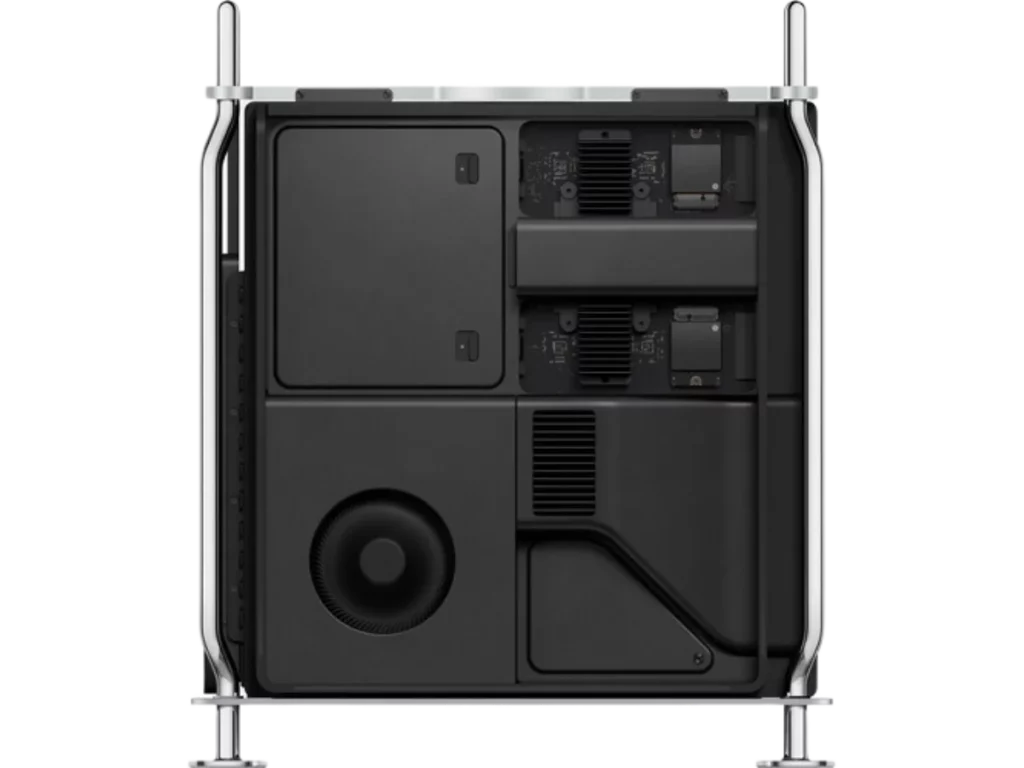
Advanced Apple Core Storage RAID 5 Data Recovery Process
Once the drives were fully imaged, our engineers moved into the data reconstruction stage. The objective was to rebuild the RAID 5 array virtually while preserving the original structure and ensuring full data integrity.
Steps of the recovery process:
Drive cloning:
Each healthy drive image was duplicated to remove any risk of additional damage during reconstruction.RAID configuration mapping:
The array’s block order, stripe size, and parity rotation were examined to restore the correct logical structure.Data extraction:
Using specialised recovery utilities, our engineers reconstructed missing data fragments from the Apple Core Storage layer.File verification:
All recovered data was reviewed carefully to confirm that filenames, timestamps, and folder structures matched the original layout.
This detailed procedure allowed us to rebuild the entire volume accurately and extract the missing files from the corrupted RAID.
For similar recovery scenarios, visit Recover Failed RAID 0 Volume and How to Repair Degraded RAID.
Fast turnaround times for business-critical data
Successful Data Recovery and Client Satisfaction
After completing the data reconstruction process, our team verified the integrity of every recovered file.
The restored volume contained thousands of high-resolution images, all organised in their original folder structure. This level of accuracy was essential for the client’s upcoming photography exhibition.
Once the recovery was confirmed, we scheduled a remote verification session so the client could preview the results before final delivery.
Every file opened successfully, confirming a complete recovery. The client expressed full satisfaction and was relieved that their creative work and professional projects had been restored in full.
For more success stories, visit Failed ZFS RAID 10 Recovery.
Why Professional RAID Recovery Matters
This case highlights that complex RAID configurations, particularly those built on Apple Core Storage, require professional expertise. Attempting recovery with general software or trying to remount failed drives can increase logical damage or make reconstruction impossible.
Professional data recovery engineers use precise procedures that include cloning, parity analysis, and data verification to prevent data loss at every stage of the process.
These controlled methods ensure a safe and complete recovery, even when multiple drives or mixed file systems are involved.
Choosing a qualified recovery team is essential for protecting your data. Skilled specialists can identify the root cause, preserve drive condition, and rebuild the array accurately.
To learn why RAID systems should never be treated as backups, visit RAID Is Not Backup.
Restoring Data with RAID Recovery Services
At RAID Recovery Services, we manage complex RAID failures such as this Apple Core Storage RAID 5 case with precision and care. Our engineers use established recovery methods, advanced diagnostic tools, and secure handling procedures to ensure every project is completed safely.
Whether your RAID system is affected by logical corruption, failed drives, or file system inconsistencies, our team can rebuild the array and restore your essential data. We work with all RAID levels and file systems across macOS, Windows, and Linux environments.
If your Apple RAID system stops responding or fails to mount, avoid using repair utilities or reinitialising the drives. Contact our specialists for a professional evaluation and begin the recovery process with confidence.
Trust the experts with proven results
Frequently Asked Questions
What causes Apple Core Storage RAID 5 to fail?
Apple Core Storage RAID 5 can fail due to drive corruption, file system inconsistencies, or a damaged parity structure. Hardware issues such as head crashes or controller faults can also disrupt the array and make the volume inaccessible.
Can I use Disk Utility to repair a failed Apple Core Storage RAID 5?
Disk Utility may identify the issue but cannot fully repair a complex RAID failure. Repeated repair attempts can increase data corruption. It is safer to stop using the array and consult professional recovery engineers.
How do professionals recover data from Apple RAID systems?
Specialists clone each drive, analyse the RAID configuration, and rebuild the array virtually in order to extract the data safely. This controlled method protects data integrity and prevents further harm to the original disks.
How long does Apple Core Storage RAID 5 data recovery take?
The timeframe depends on the type of failure and the number of affected drives. Most Apple RAID 5 data recovery cases can be completed within a few days once the initial evaluation is complete.