
LTO tape storage remains one of the most reliable and durable backup methods used in enterprise environments. Even with the rise of cloud and disk-based solutions, many organisations still depend on LTO tapes to safeguard critical information because of their stability, cost efficiency and long retention lifespan.
Understanding what an LTO tape is and how it works helps businesses make informed decisions about long term data protection.
Although LTO tapes are built for endurance, they are not immune to physical wear, environmental damage or mechanical issues. Proper handling and maintenance are essential to ensure ongoing access to archived data.
This article outlines the fundamentals of LTO technology, the advantages it offers and the early indicators of tape failure so you can address issues before important data becomes inaccessible.
What Does LTO Mean?
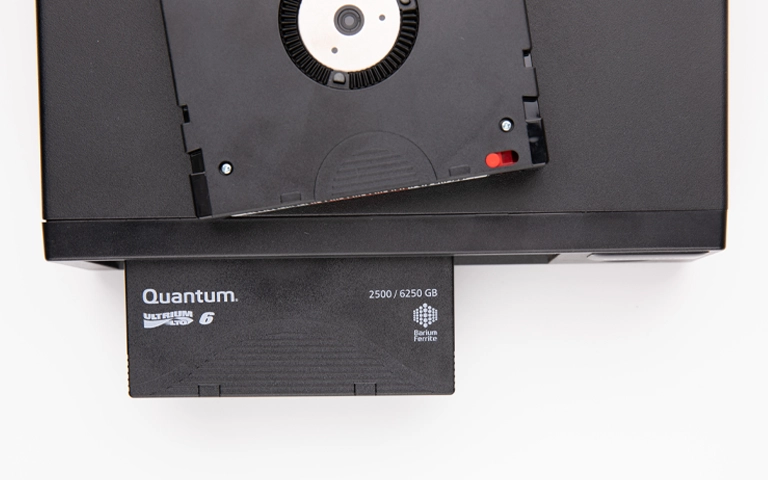
LTO stands for Linear Tape Open, a magnetic tape storage format introduced as an open standard by IBM, Hewlett Packard and Quantum in the late 1990s. It was designed to offer a dependable, scalable and cost-efficient alternative to closed, proprietary tape systems.
LTO technology writes data in a linear pattern along the tape, allowing large volumes of information to be stored sequentially with a reduced risk of corruption.
Each new LTO generation increases capacity, speed and overall efficiency, making it suitable for both smaller organisations and large data centres.
Modern LTO cartridges can hold several terabytes of data, and with compression enabled, their effective capacity can be significantly higher. This scalability ensures LTO tape storage remains relevant as data demands continue to rise.
How LTO Tape Storage Works
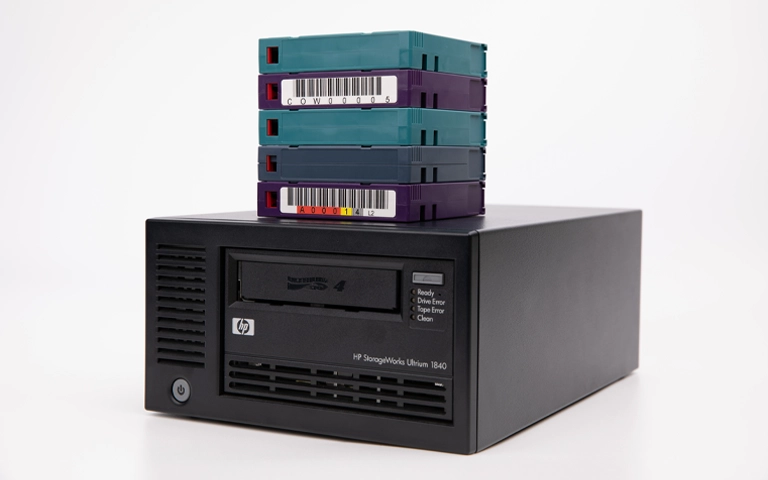
LTO tape storage uses magnetic recording technology to write and retrieve data. Each cartridge holds a long strip of magnetic tape that moves through the drive, passing read and write heads which store information in tightly aligned linear tracks.
Unlike random access devices such as hard drives or SSDs, LTO tapes operate through sequential access. Data is written and read in a continuous stream, making the format ideal for backups, large archives and long term retention rather than frequent modifications.
Modern LTO drives include hardware encryption, strong error correction and WORM (Write Once, Read Many) capability. These features help ensure data remains secure, unaltered and readable throughout the tape’s life span.
For a wider overview of how magnetic tape systems are used across different sectors, read our article Tape Drives.
Advantages of Using LTO Tape Storage
LTO tape storage remains a preferred option for many organisations because it offers a strong mix of reliability, scalability and overall cost efficiency. Key advantages include:
High capacity: Newer LTO generations can store tens of terabytes per cartridge, making them suitable for large scale backups and long term archives.
Durability: LTO tapes are designed for longevity and, when stored correctly, can maintain data integrity for more than 30 years.
Cost efficiency: Compared with disk or cloud storage, LTO tapes deliver a lower cost per terabyte, especially for long term retention.
Data security: Hardware encryption and WORM technology help protect sensitive information from alteration or unauthorised deletion.
Energy savings: Tapes do not require constant power or cooling, reducing energy usage in data centre environments.
Offline protection: Since they remain disconnected from networks, LTO tapes are not vulnerable to cyberattacks or ransomware.
These strengths make LTO an important part of modern data protection planning. Many organisations combine LTO systems with digital backup methods, as discussed in our article Tape Backup for Business.
Signs of LTO Tape Failure
Although LTO tapes are designed for long life, they can still develop physical or logical issues over time. Identifying early warning signs helps reduce the risk of permanent data loss.
Common indicators include:
Frequent read or write errors: If the drive struggles to access or verify data, it may point to surface wear or magnetic deterioration.
Slow performance: Longer load, rewind or transfer times can signal alignment problems or damage to the tape reels.
Unreadable cartridges: When a drive repeatedly rejects a cartridge or fails to mount it, the tape may be physically damaged or the magnetic coating may be degrading.
Error messages or alerts: Backup software or LTO monitoring tools may report calibration issues or poor tape condition.
Audible noises: Clicking, scraping or grinding noises from the drive often indicate mechanical strain or misalignment.
If you notice any of these symptoms, stop using the cartridge immediately to avoid additional damage. Continuing to run backups or restores can overwrite recoverable data. For critical tapes, a professional assessment is the safest next step.
Fast turnaround times for business-critical data
When LTO Tapes Fail – Professional Recovery Solutions
Even well-maintained LTO tapes can fail as a result of age, environmental conditions or issues within the tape drive itself.
Physical problems such as creased tape, broken leaders or damage to the cartridge shell can render the media unreadable. Logical issues, including data corruption or misalignment between different drives, can also prevent access to stored information.
Trying to recover data with generic tools or improvised methods can make the situation significantly worse. LTO tapes are delicate, and improper handling may damage the magnetic layer or place unnecessary strain on the reels.
At RAID Recovery Services, our specialists carry out secure tape recovery in a controlled environment. Using advanced imaging methods, we extract and reconstruct data from damaged or degraded LTO tapes without increasing the risk of further loss.
Whether the issue stems from physical damage or logical corruption, our engineers are often able to recover a full or partial dataset effectively.
Organisations that depend on LTO systems can reduce downtime by having experienced recovery partners ready when needed.
For more complex business storage scenarios, review our article Business Data Recovery.

Conclusion
LTO tape storage remains one of the most dependable methods for protecting large volumes of data. Its long life span, strong security features and cost efficiency make it a valuable option for organisations that require reliable backup and archiving.
However, even durable media like LTO tapes can deteriorate or fail if they are not handled correctly.
Recognising early warning signs and applying proper maintenance practices helps prevent irreversible data loss. When problems do occur, professional support provides the safest path to a successful recovery.
To strengthen your long term data protection approach and reduce future risks, read our article Data Loss Prevention.
If you have a failed or unreadable tape, contact RAID Recovery Services for a professional evaluation and secure data restoration.
Trust the experts with proven results
Frequently Asked Questions
What is an LTO tape used for?
LTO tapes are used for data backup, archiving and long term storage in enterprise environments. They help organisations preserve large volumes of data securely and cost effectively.
How long do LTO tapes last?
When stored under proper environmental conditions, LTO tapes can remain readable for more than 30 years. Periodic testing is recommended to confirm long term integrity.
Can data be recovered from a damaged LTO tape?
Yes. Specialists at RAID Recovery Services can recover data from physically damaged or corrupted LTO tapes using dedicated equipment and controlled cleanroom processes.
What are the signs of LTO tape failure?
Frequent read or write errors, slower loading, drive rejection or software warnings often signal tape wear or potential damage.
Are LTO tapes still relevant today?
Absolutely. LTO tape storage is still widely used thanks to its high capacity, low cost per terabyte and strong offline protection against cyberattacks and ransomware.