
Natural disasters often strike without warning, and when they do, the impact goes far beyond physical buildings and equipment.
For one medium sized business, a severe flood left their MySQL database server completely inaccessible. The system stored critical backup data that underpinned day to day operations, financial records and customer information.
Recognising the risk of permanent data loss, the company chose not to restart or repair the damaged server on site.
Instead, they contacted RAID Recovery Services immediately for a professional assessment. This rapid response was critical, as timely MySQL database recovery often determines whether data can be fully restored after a major incident.
When the system arrived at our lab, the priority was clear: restore the client’s essential database safely and efficiently while preserving every possible bit of information.
Background: MySQL Database Setup and RAID Configuration
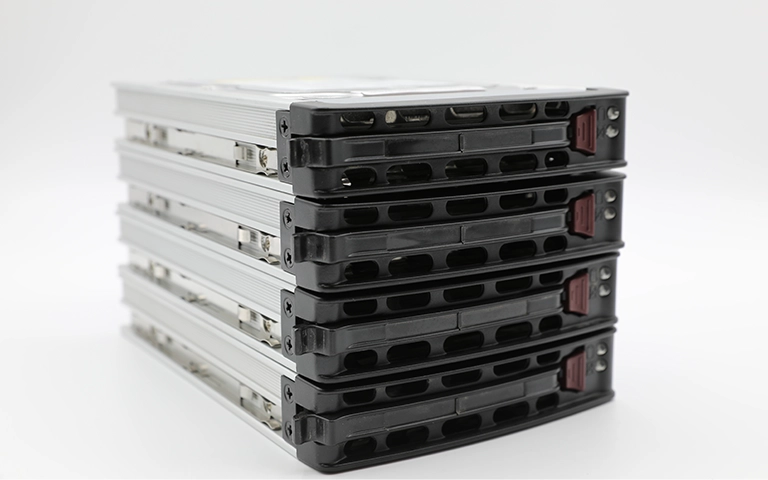
The client’s server stored essential backups for their business applications and databases. It was built with four hard disk drives in a RAID 5 configuration, selected for its balance of performance and data protection.
In this layout, the system can tolerate a single drive failure without immediate data loss because parity information is distributed across all disks.
However, RAID 5 cannot safeguard data when multiple drives fail at the same time or when there is direct physical damage from external events.
In this case, the flood affected more than one drive, leaving the array unreadable. Although the MySQL data still existed magnetically on the platters, the server could no longer rebuild the array or access the database files.
Even redundant setups such as RAID 5 can suffer corruption when hardware or environmental damage occurs, which can leave MySQL database recovery dependent on specialist intervention.
You can learn more in our article on database corruption and its causes.
The Flood and Resulting Data Loss
During a major flood, the company’s data centre suffered significant water damage. The MySQL server that held several years of business records was directly affected. Water entered the chassis through the ventilation openings and reached the drives inside.
Once the area had dried, the system was still powered off and showed no signs of activity. The client quickly recognised the risk of electrical short circuits and chose not to power it back on. This measured decision prevented additional damage to the drives and kept the data in a recoverable state.
In many similar situations, switching on a wet or recently flooded device can destroy electronic components and make recovery impossible.
By taking the correct action early, the client gave our engineers the best possible conditions for successful RAID reconstruction and MySQL database recovery.
Initial Assessment and Diagnostics
Once the server arrived at our lab, our engineers carried out a structured assessment as the first step in MySQL database recovery:
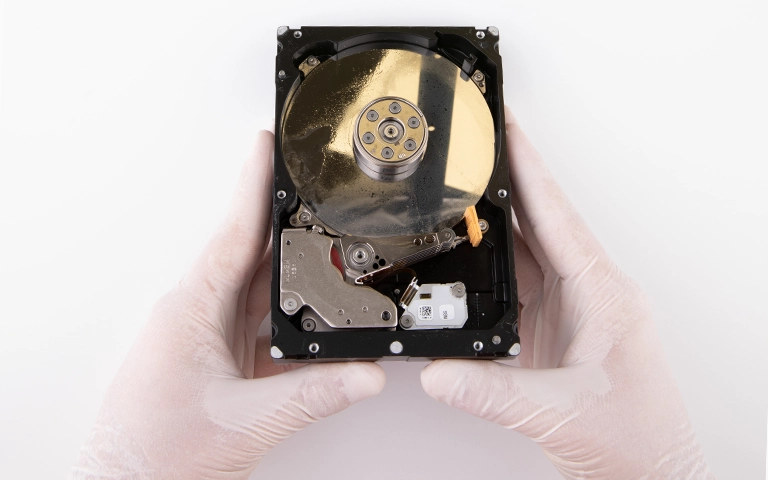
Inspection: Two of the four drives showed visible water damage around the PCB area.
Testing: Electrical diagnostics confirmed short circuits on the affected drives.
Platter check: The magnetic platters were still intact, indicating that the stored data remained recoverable.
Verification: The remaining drives were examined to confirm the original RAID 5 parameters and layout.
Recovery plan: The team prepared for controlled PCB replacement and secure RAID reconstruction to support a full MySQL database restore.
RAID 5 Data Recovery Process
Once diagnostics were complete, our engineers moved ahead with recovery in a series of controlled stages:
The two drives with electrical damage had their printed circuit boards replaced with compatible donor units. This allowed the drives to power on safely without further risk of shorts or instability.
To preserve calibration and drive specific parameters, the adaptive firmware chips were transferred from the original PCBs to the donor boards. This ensured each drive retained its original alignment during the MySQL database recovery process.
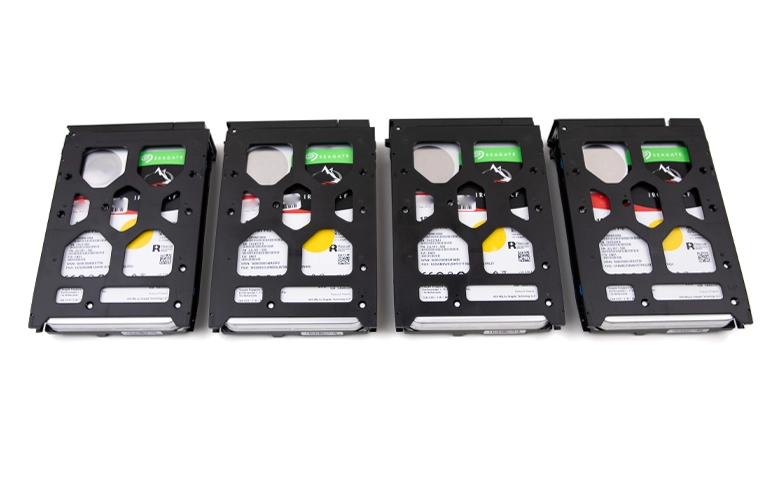
Every hard drive, including the repaired units, was cloned sector by sector. These clones provided secure working copies so engineers could perform all virtual reconstruction work without touching the original media.
The RAID 5 array was rebuilt virtually by confirming the correct block size, parity order and drive sequence. This step restored the logical structure of the array and made the underlying MySQL data accessible again.
Once the virtual RAID was stable, the MySQL database files were extracted, repaired where needed and then prepared for integrity checks.
Engineers confirmed that the recovered database could be opened and used without corruption, validating key tables, relationships and stored procedures.
This workflow followed the same safe principles outlined in How to Repair Degraded RAID, supporting a precise and reliable MySQL database recovery.

Recovery Results and Client Outcome
After the virtual reconstruction and extraction, all MySQL database files were successfully recovered. The restored data included complete tables, indexes and configuration files that were critical to the client’s business applications and reporting.
Integrity checks confirmed that the database structure remained intact and that no corruption was present. Once validation was complete, the recovered data was transferred to secure external storage and delivered to the client for immediate use.
The company was able to resume operations without data loss or prolonged downtime. Thanks to the client’s rapid response and our team’s experience with RAID 5 and MySQL database recovery, the entire project was completed within a few working days.
Fast turnaround times for business-critical data
Lessons Learned and Prevention Tips
This case shows clearly how fast action and professional handling can be the difference between a successful MySQL database recovery and permanent data loss. Based on our experience, here are several key lessons:
Avoid powering on water damaged systems.
Attempting to start a flooded server can short circuit components and destroy data that would otherwise be recoverable.Maintain offsite and cloud backups.
Keep at least one copy of your critical data outside your primary location to protect against disasters affecting the main site.Monitor RAID health regularly.
Proactive monitoring and SMART checks help identify degrading drives early and reduce the risk of multiple drive failures.Protect servers from environmental risks.
Wherever possible, keep equipment elevated and use suitable enclosures in areas that may be exposed to flooding or leaks.Seek professional help immediately.
Early assessment by experienced engineers significantly increases the success rate of complex RAID and database recoveries.
Understanding the main Reasons for RAID Data Loss helps businesses strengthen their prevention strategies and reduce the likelihood of facing a similar incident in the future.
Conclusion: Rapid Response, Reliable Results
The MySQL database recovery in this case was a complete success and clearly demonstrates how critical professional expertise is after a natural disaster. Because the client chose not to attempt self repair, our engineers were able to restore the data safely, completely and within a controlled process.
At RAID Recovery Services, we specialise in resolving complex RAID and database failures caused by floods, fires and hardware breakdowns. Our structured methodology gives even heavily damaged systems the best possible chance of a full MySQL database recovery.
We have also restored other enterprise databases in comparable circumstances, including the scenario detailed in our Oracle Database Recovery Case.
If your server or database has been affected by a natural disaster, contact RAID Recovery Services for a professional assessment and a secure recovery plan tailored to your environment.
Trust the experts with proven results
Frequently Asked Questions
How can data be recovered from a flooded MySQL server?
If the system is handled correctly and not powered on after water exposure, data from a flooded MySQL server can often be recovered. Professional engineers can clean and image the drives, then rebuild the RAID array and restore the MySQL database in a controlled environment.
What should I do immediately after my MySQL server is damaged by water?
Disconnect the power immediately and do not attempt to boot the system. Keep the device dry, avoid opening the chassis and contact a professional recovery service to minimise the risk of further electrical or magnetic damage.
How long does MySQL database recovery take after physical damage?
Recovery time depends on the extent of the damage and the complexity of the RAID configuration. In most cases, MySQL database recovery can be completed within 2 to 5 business days once diagnostics and planning are finished.
Is RAID 5 still reliable for database storage?
RAID 5 provides redundancy, but it is not disaster proof. Events such as floods or fires can damage multiple drives at the same time. Regular verified backups and offsite storage are essential for full protection of critical databases.
Does RAID Recovery Services handle other database types besides MySQL?
Yes. Our engineers recover data from multiple database platforms, including Oracle, Microsoft SQL Server and PostgreSQL, using secure and proven recovery methods tailored to each environment.